
Orthodontist in Płock – modern treatment of malocclusion in children and adults
At Panorama Uśmiechu, we offer a full range of orthodontic treatments using the latest technology, including fixed braces, aesthetic braces and aligner braces, as well as innovative supporting solutions. By combining orthodontic treatment with 3D diagnostics, intraoral scanning and interdisciplinary cooperation, we ensure that therapy is predictable, comfortable and long-lasting.
When should you see an orthodontist?
You should consider visiting an orthodontist if you notice any of the following:
- crooked or crowded teeth,
- gaps between your teeth,
- an overbite, underbite or crossbite,
- tooth wear, which is often associated with bruxism,
- temporomandibular joint problems, such as clicking or headaches,
- recurrent gum inflammation,
- difficulties with hygiene,
- mouth breathing or abnormal tongue function.
Malocclusion affects not only the appearance of the teeth, but also their health, as well as that of the periodontium, masticatory muscles and temporomandibular joint.
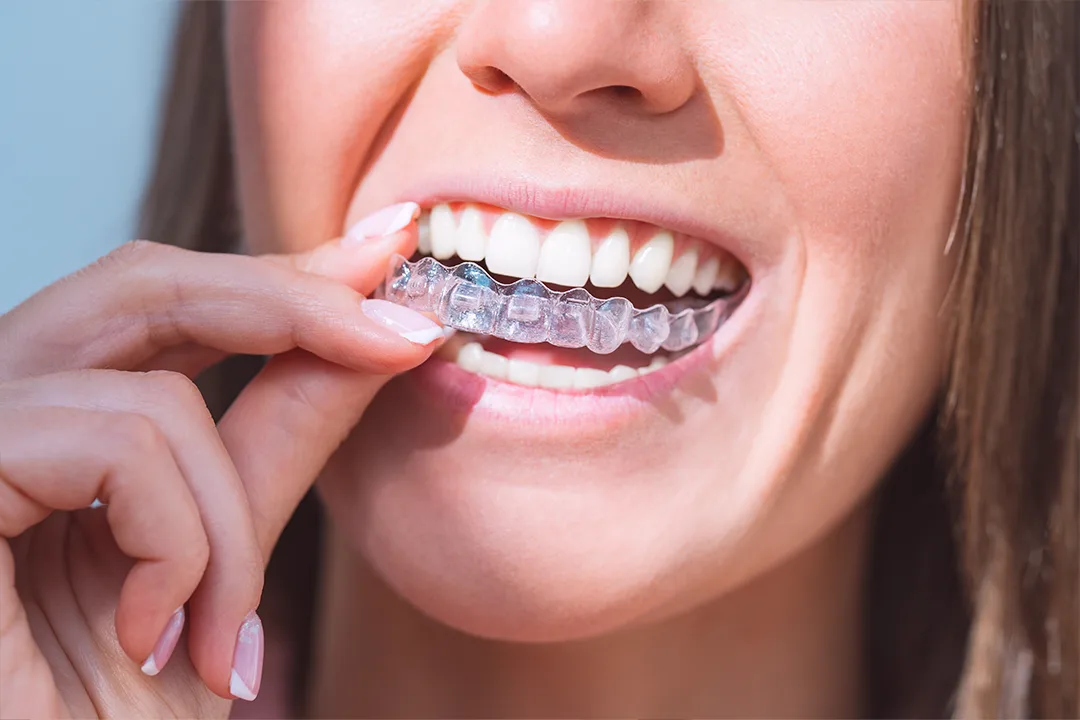
What types of orthodontic appliances do we use at Panorama Uśmiechu?
We select the treatment method on a case-by-case basis, depending on the patient’s age, the type of defect, and their expectations. We offer:
Fixed braces (metal and aesthetic)
classic metal brackets,
rhodium-plated metal braces,
aesthetic crystal brackets (extremely discreet and resistant to discolouration).
Overlay braces – suitable for children and adults
Modern, almost invisible aligners.
Advantages: improved aesthetics and comfort, easier hygiene and a predictable digital treatment plan.
Braces for children
removable braces,
Hyrax braces and expanders for jaw expansion
thick arch appliances: palatal arch, Lip Bumper and distaliser,
braces using mini orthodontic implants (Beneslider and Hybrid Hyrax)
A thorough diagnosis is performed for each type of brace, including a 3D scan, which is a more comfortable alternative to traditional impressions.
Orthodontic treatment step by step

Consultation and 3D dental diagnostics
During the initial consultation, the orthodontist will:
- examines the patient and assesses their bite,
- takes photographs (intraoral and facial),
- orders a pantomogram and cephalometry (and CBCT if indicated),
- performs a 3D scan of the teeth instead of taking traditional impressions.
Based on this information, the orthodontist will make a preliminary diagnosis and determine the scope of treatment. If necessary, we refer the patient to a dentist, periodontist, dental surgeon, physiotherapist or speech and language therapist to prepare the oral cavity for the start of therapy.

Development of an individual orthodontic treatment plan
During the second visit, the orthodontist:
- discusses a detailed analysis of the bite,
- presents possible treatment methods (fixed braces, aligners and auxiliary braces),
- explains the duration of therapy, the frequency of visits, and the cost estimate.
This is one of the most important visits in the entire process.

Preparing for brace fitting (dental hygiene office)
Before fitting the braces, the dental hygienist:
- assesses the state of your oral hygiene,
- provides instruction on brushing and flossing teeth,
- selects dental hygiene accessories,
- performs scaling and sandblasting (tartar and deposit removal) if necessary,
- applies separators, if required, before fixed braces are fitted.
Good dental hygiene is a prerequisite for safe orthodontic treatment.

Fitting orthodontic appliances
During the appointment:
- we fit fixed appliances or hand over the first set of aligners,
- instruct the patient on how to care for the appliance,
- we discuss dietary and behavioural guidelines.
The orthodontic appointment usually lasts between 30 and 90 minutes, depending on the type of appliance.

Follow-up appointments with the orthodontist
These take place every 4–8 weeks for fixed braces or less frequently for aligners. During these appointments, we activate the braces, monitor progress, and adjust the plan if necessary.

Retention – consolidating the results
After removing the braces, we carry out the following:
- a fixed retainer (a thin wire on the inside of the teeth),
- retention aligners,
- regular stabilisation check-ups.
Retention is essential in protecting the results of treatment for years.
Why should you choose us to treat your malocclusion?

3D dental diagnostics and scanning at your initial consultation.

Treatment for both children and adults, from early therapy to comprehensive rehabilitation.

Modern appliances such as aligners, crystal brackets, Hyrax appliances and mini-implants.

Full interdisciplinarity, with orthodontists, surgeons, prosthodontists, periodontists and dental physiotherapists all working together.

Aesthetic and precise results thanks to digital technologies.

Patient comfort comes first – anaesthesia, gentle techniques, and clear explanations at every stage.
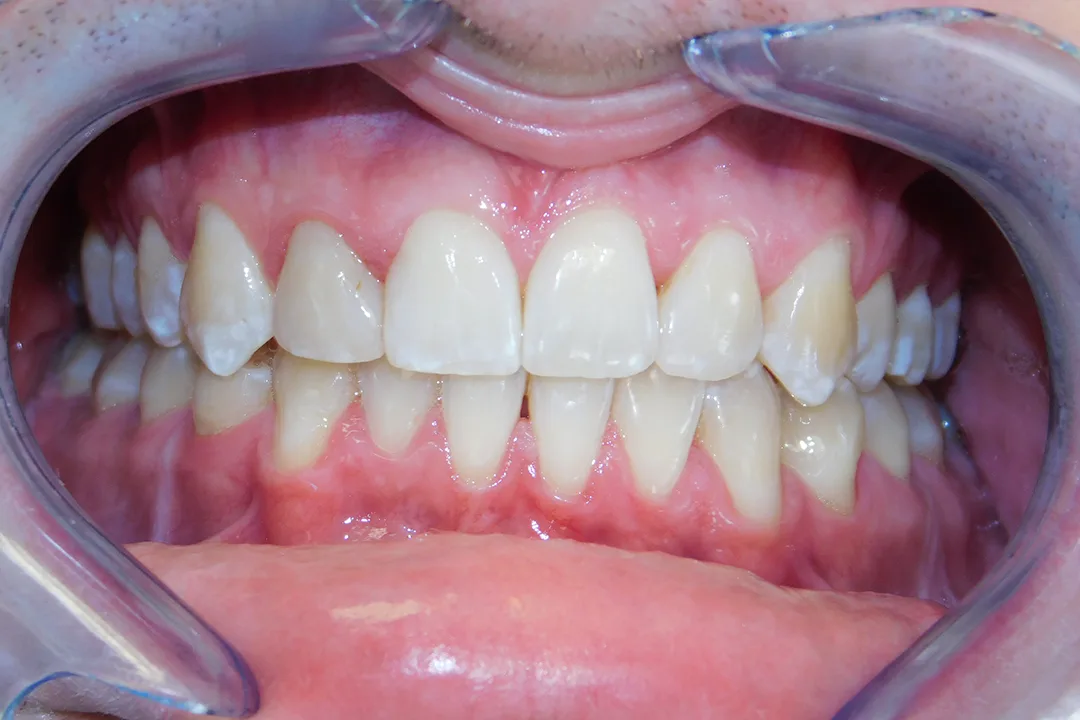
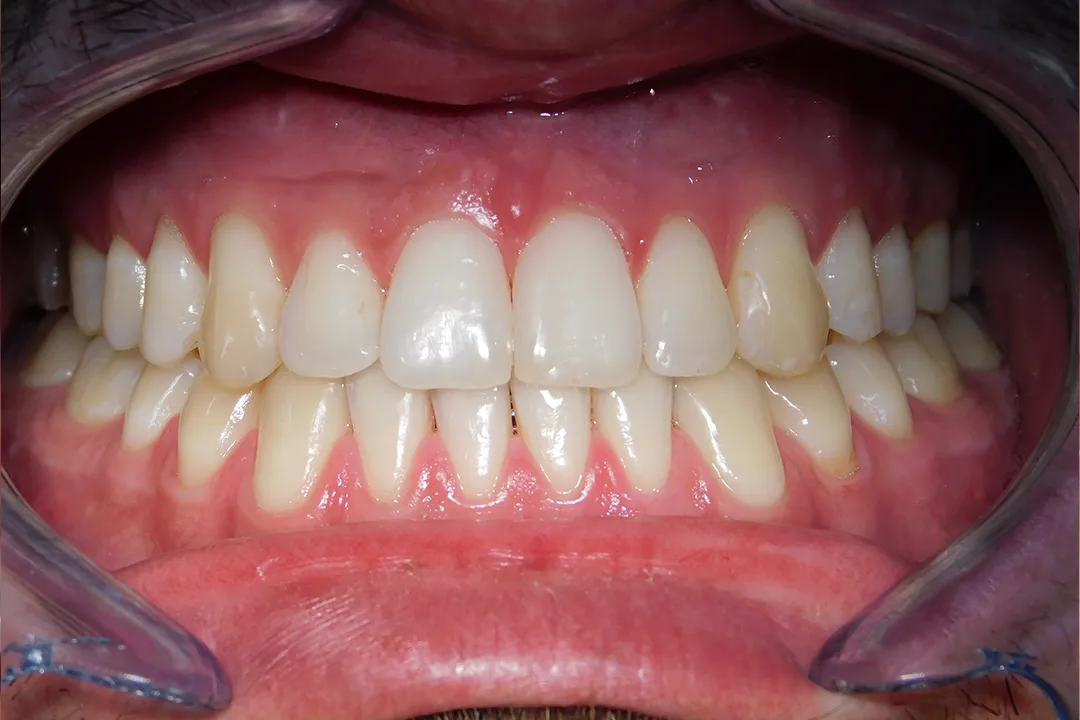
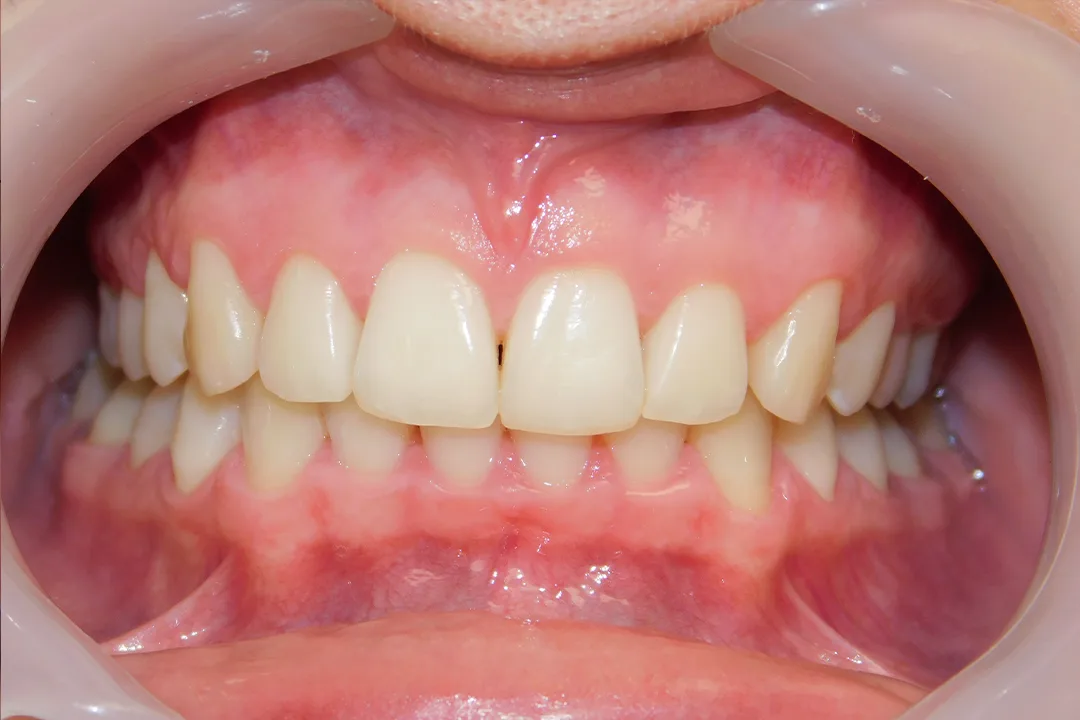
Treatment outcomes
See how modern treatment methods restore a healthy smile and self-confidence
FAQ
It is a good idea to have a recent dental check-up. If you have had a panoramic X-ray in the last 12 months, please bring it with you. Maintain good oral hygiene and arrive 10–15 minutes early to complete the necessary paperwork.
No, as the fitting of braces is a non-invasive procedure that does not cause any discomfort. You may experience tenderness for 2–3 days after the braces are fitted, which is a natural reaction of the teeth to the orthodontic forces.
It usually takes between 60 and 90 minutes, depending on the complexity of the defect and the type of braces.
Every 4–8 weeks. With aligners, visits are less frequent.
This depends on the type of defect and the patient’s age. Removable braces are mainly used for children. Fixed braces are suitable for more complex malocclusions. Aligners are discreet and comfortable, and are just as effective as fixed braces for many malocclusions.
Yes, as long as they are worn regularly. In children, removable appliances help correct jaw development and prevent future defects.
On average, it takes 12–24 months, depending on the type of defect, the type of braces, and how regularly you attend appointments.
Yes. Fillings, root canal treatment and wisdom tooth removal can all be carried out alongside orthodontic treatment.
Contact the surgery reception as soon as possible. Waiting until your next appointment may prolong your treatment.
Yes, which is why we teach hygiene techniques and recommend suitable toothbrushes, floss and other accessories. We also remind you about regular hygiene check-ups.
Would you like to start orthodontic treatment in Płock?
Book an appointment to discuss your options and receive a personalised treatment plan.