
Dental surgery in Płock –
safe and modern procedures
At Panorama Uśmiechu, we perform a full range of dental surgery procedures. We work in a modern and precise manner, using effective anaesthesia methods to ensure that treatment is as comfortable and predictable as possible. Our goal is not only to remove the source of the problem, but also to prepare a stable foundation for further prosthetic, implantological or orthodontic treatment.
What is dental surgery?
It includes procedures to remove inflammation, treat changes to bone and soft tissue, and prepare the oral cavity for further treatment. This specialised field combines precision and extensive anatomical knowledge with modern techniques that allow for faster healing and less invasiveness.
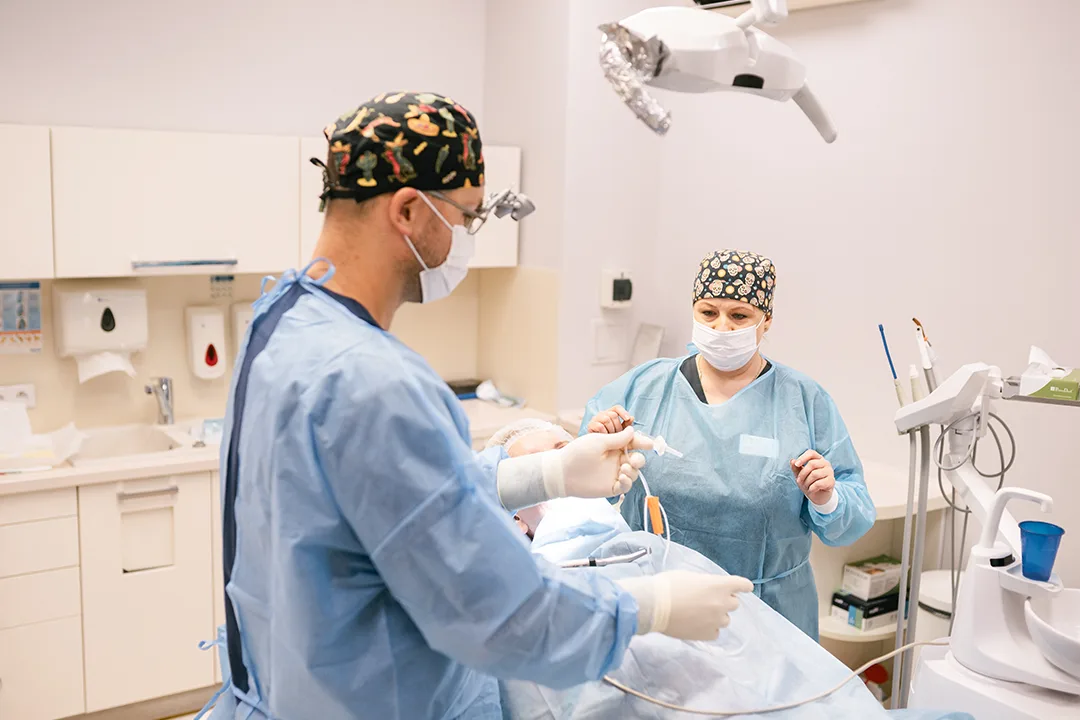
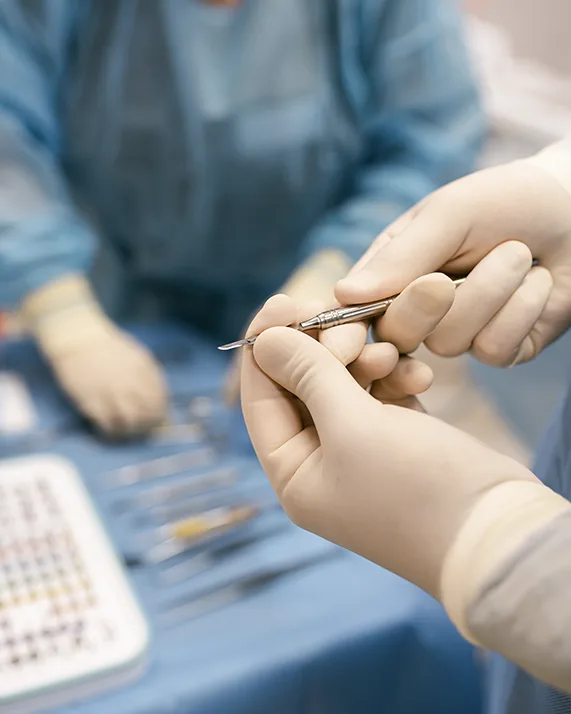
Range of surgical procedures performed at Panorama Uśmiechu
At our clinic, we perform the following procedures, among others:
- tooth extraction,
- removal of impacted teeth,
- removal of wisdom tooth buds (germectomy),
- cyst removal,
- root tip resection,
- exposure of impacted teeth (often prior to orthodontic treatment),
- implant placement,
- alveolar bone augmentation,
- piezoelectric bone surgery,
- corticotomy to support orthodontic treatment.
Each procedure is preceded by a thorough diagnosis, including 3D computed tomography, to allow us to plan the procedure precisely and ensure maximum safety for the patient.
When should you see a dental surgeon?
We encourage you to consult us if you experience any of the following:
- prolonged discomfort in a tooth or the surrounding tissue,
- problems with wisdom teeth, such as lack of space, abnormal eruption or recurrent inflammation,
- a tooth that has not grown properly or remains impacted,
- visible changes in the area around the tooth root, such as a cyst,
- the need to prepare the mouth for implants or prosthetic treatment,
- an orthodontic treatment plan that requires a tooth to be exposed.
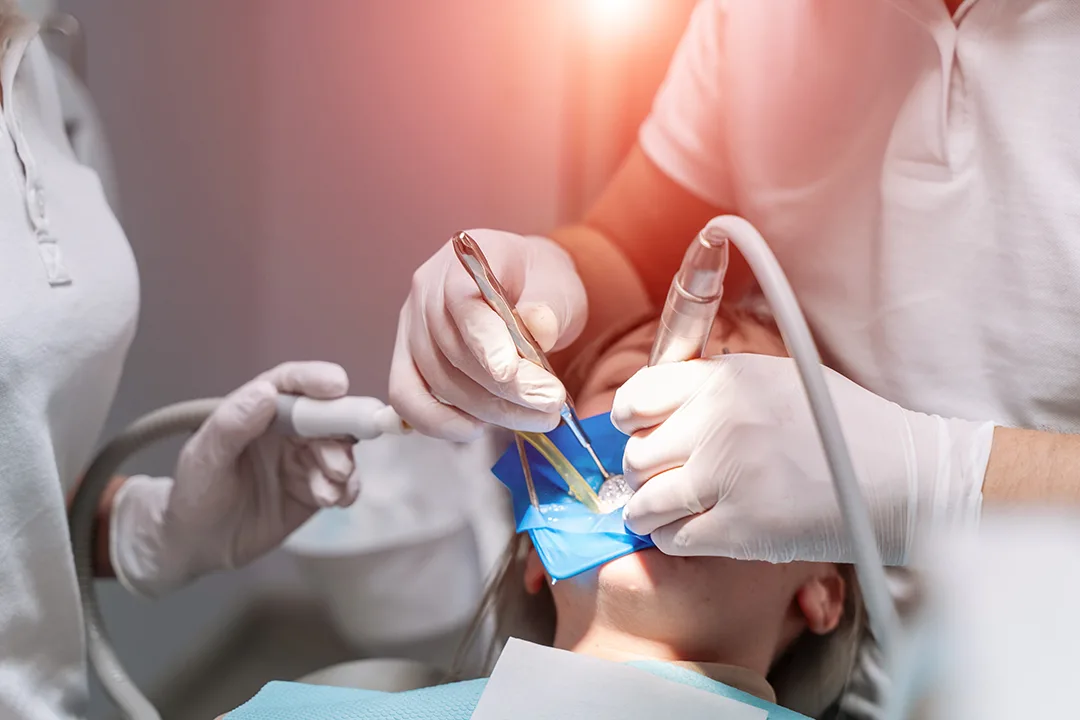
How does surgical treatment work?

Diagnosis and surgical consultation
We begin the first visit with a consultation and a thorough examination of the patient. During surgery, we usually perform a 3D CT scan to assess the position of the roots and identify any inflammatory changes or anatomical conditions. Based on this information, the doctor will prepare a treatment plan.

Discussion of the procedure and alternatives
After analysing the results of the examination, we present the details of the planned procedure, possible alternatives, prognosis, expected recovery time and the cost of the treatment. This is an opportunity for the patient to ask questions and clarify any uncertainties — we want them to know exactly what to expect.

Anaesthesia and procedure
We perform procedures under local anaesthesia and, if necessary, administer sedation to minimise stress and increase patient comfort. We use atraumatic techniques and, where possible, piezo surgery to reduce tissue damage and shorten healing time. Depending on the procedure, it usually takes between 30 minutes and two hours.

Post-operative care and follow-up
After the procedure, the patient will receive detailed recommendations regarding hygiene, diet, and healing. We arrange an individual follow-up appointment and are available to answer any questions. Proper postoperative care is essential for proper healing and long-lasting results.
Why choose us for your surgery?

We use 3D computed tomography for maximum precision

Our techniques minimize post-operative discomfort and swelling

We provide comfortable and peaceful treatment conditions

We offer sedation support

We carry out all stages of treatment in one place, from dental diagnostics to implants and prosthetics

We support patients after the procedure to ensure proper healing
Safety and comfort
Although dental surgery can cause anxiety, it is a safe and predictable procedure when carried out with proper preparation and modern techniques. Thanks to anaesthesia and a calm, step-by-step approach, patients feel confident and comfortable during the procedure, even those who suffer from dentophobia.
FAQ
No, as all procedures are performed under local anaesthesia. For patients experiencing stress, nitrous oxide sedation can also be used.
This depends on the type of procedure and the patient’s general health. In some cases, particularly for people with underlying health conditions, antibiotics are recommended.
Yes, provided they are on the same side or the treatment plan requires it (e.g. two wisdom teeth).
No, at our clinic we use local anaesthesia and sedation, such as nitrous oxide, to reduce anxiety and facilitate the procedure. General anaesthesia is not necessary for standard dental surgery.
In many cases, yes, but not always. This decision depends on the type of procedure and how the tissues heal.
This usually takes 7–14 days, depending on the extent of the procedure and the patient’s individual predisposition.
For minor procedures, this is possible on the same day. After more extensive procedures, however, we recommend rest.
Not for the first few days. Physical exertion can cause swelling and hinder the healing process. You can usually resume your normal activities after about a week.
We do not recommend it. Smoking increases the temperature in the mouth, which slows down the healing process, and the tar in cigarettes can irritate the wound.
Would you like to ask us a question or schedule a dental surgical consultation?
Get in touch – we can help you choose the safest and most effective treatment method.