
Comprehensive bite restoration
for worn teeth in Płock
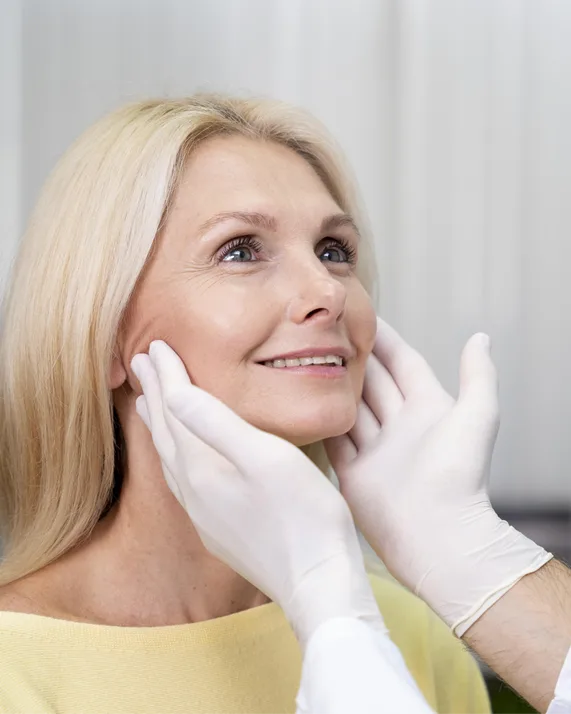
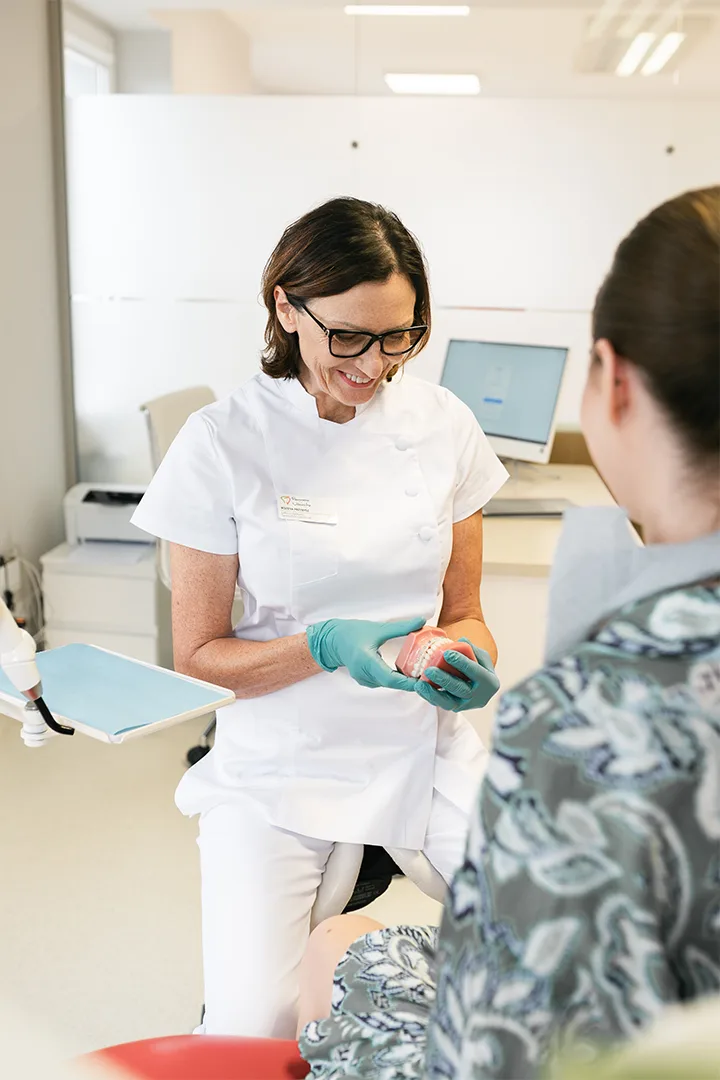
Tooth wear is a problem that affects patients of all ages. It can manifest as enamel abrasion, shortening of the tooth crowns, excessive tension in the masticatory muscles, changes in facial appearance, and temporomandibular joint disorders. At the clinic, our approach to treating worn teeth is based on 3D diagnostics, occlusion analysis and interdisciplinary cooperation between specialists such as orthodontists, prosthodontists and physiotherapists. Each treatment begins with a detailed consultation and examination to understand the cause of the discomfort and the mechanism of tooth wear.
What is tooth wear, and what causes it?
Tooth wear is the gradual loss of hard tissue at the points where teeth come into contact with each other. Although this process is partly natural, it is usually exacerbated by factors such as:
- bruxism – grinding or clenching of the teeth at night or during the day,
- malocclusion and occlusal overload,
- increased muscle tension,
- stress and sleep disorders,
- postural defects affecting the position of the mandible can also contribute to the problem.
If problems are left untreated, these issues can lead to tooth fractures, hypersensitivity, headaches, migraines and temporomandibular joint problems.
How can you recognise tooth wear?
The most common symptoms that should not be ignored are:
- shortening of the tooth crowns,
- smooth or flattened chewing surfaces,
- hypersensitivity to cold and heat,
- morning facial muscle discomfort,
- enamel cracks and leaky fillings,
- discomfort or clicking in the temporomandibular joint,
- recurrent headaches.
Early diagnosis can help you avoid extensive restorations and costly procedures.
Why does treating worn teeth require the cooperation of so many specialists?
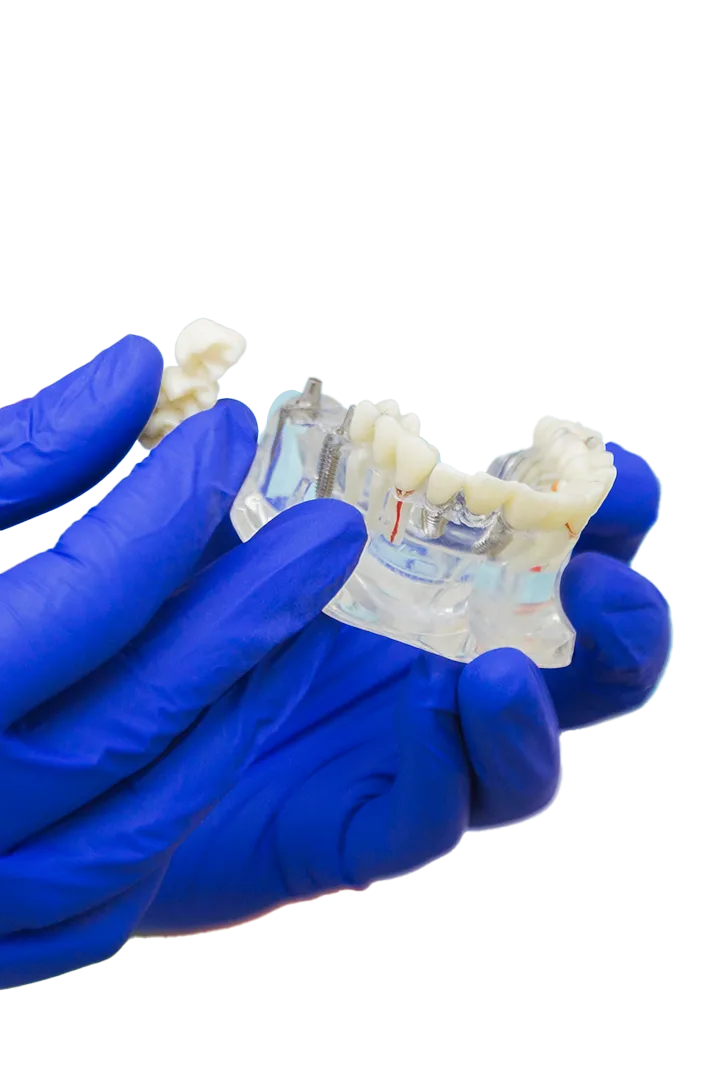
Teeth wear is not just an aesthetic issue. It is also a functional disorder, which is why effective treatment requires the involvement of several specialists, including:
- an orthodontist in case when it’s necessary to align the teeth correctly,
- a prosthodontist to restore worn surfaces,
- a dental physiotherapist, who works with muscle tension,
- a dental surgeon / implantologist, when supporting procedures are required for restoration,
- a psychologist, if bruxism is the result of severe stress.
This approach ensures a lasting effect by eliminating the cause rather than just the symptoms.
How does Panorama Uśmiechu treat worn teeth?
We always tailor the treatment process to each patient, but it usually involves the following stages:

Initial consultation, discussion and examination
We start the treatment process by having a detailed discussion with the patient and carrying out an examination. We analyse the symptoms, any reported complaints and habits, as well as how the masticatory muscles work. The aim is to understand the cause of tooth wear before resorting to additional tests.

Diagnosis and bite analysis
Based on the examination, we carry out the necessary diagnostic tests:
- 3D scan of the teeth,
- analysis of the mandibular relationship,
- CBCT tomography of the temporomandibular joint (if indicated),
- assessment of muscle tension.
Dental imaging tests are an additional tool that helps us determine the cause of the problem.

Muscle and joint stabilisation (deprogramming)
If necessary, we implement a preparatory stage in cooperation with a dental physiotherapist, including:
- relaxation splints,
- manual therapy,
- exercises,
- home recommendations.
This stage aims to normalise the functioning of the masticatory muscles, reduce overload and stabilise the position of the mandible prior to further dental treatment.

Orthodontic treatment (if necessary)
Teeth alignment allows for the correct distribution of chewing forces. This improves the durability of future restorations and reduces the invasiveness of the planned work.

Restoration of worn teeth
Depending on the degree of wear, we use:
- composite bonding,
- adhesive restorations,
- veneers,
- prosthetic crowns.
This stage will restore the function, comfort and appearance of your smile.
What does occlusion reconstruction involve?
Occlusion reconstruction is an advanced stage of treatment for tooth wear, performed only after the temporomandibular joint and muscles have been stabilised. The entire process is carefully planned digitally using CBCT diagnostics and occlusion analysis.
Reconstruction involves:
- planning the ideal occlusal relationship,
- working with a deprogrammer,
- reconstructing each tooth separately,
- reconstruction with composite or ceramic, depending on requirements,
- performing the reconstruction in 2 to 4 longer sessions,
- checking joint function and stabilising the effect.
The result is improved chewing function, protection of the teeth against further abrasion and a marked improvement in the aesthetics of the lower face and features. Teeth do not usually require grinding during restoration; the dentist selects the technique on a case-by-case basis.
Why should you choose us for tooth wear treatment?

Comprehensive cooperation between an orthodontist, a prosthodontist and a dental physiotherapist

3D dental diagnostics available at the clinic

Reconstructions using magnification with millimetre precision

Digital technologies: Digital Smile Design, 3D scanning and occlusion analysers

Treatment is carried out under controlled conditions using modern anaesthesia methods

The possibility of phased reconstruction tailored to the patient’s budget
FAQ
No, as all stages are performed under local anaesthesia. The entire process is comfortable, and additional anaesthesia can be used for the most sensitive teeth.
It is the reconstruction of teeth following the stabilisation of the temporomandibular joint. We restore each tooth individually using composite or ceramic materials to recreate the correct bite height and function.
Bonding involves restoring teeth with composite resin, usually without grinding. It is used in mild and moderate cases where crowns are not necessary.
Not for composite restorations. For ceramic restorations, such as veneers and crowns, we only perform minimal grinding when necessary to ensure the work is durable and aesthetically pleasing.
In most cases, yes, because changing the height of one or more teeth affects the others. The extent of the restoration is determined by occlusion analysis and digital simulation.
Composite allows for quick and easy repairs. Thanks to the preserved matrices and digital documentation, we can recreate the restoration in one visit.
Would you like to stop tooth wear and enjoy comfortable chewing again?
Book a consultation at Panorama Uśmiechu and we will create a personalised treatment plan for you.