
Dental diagnostics in Płock –
a full range of examinations in one place
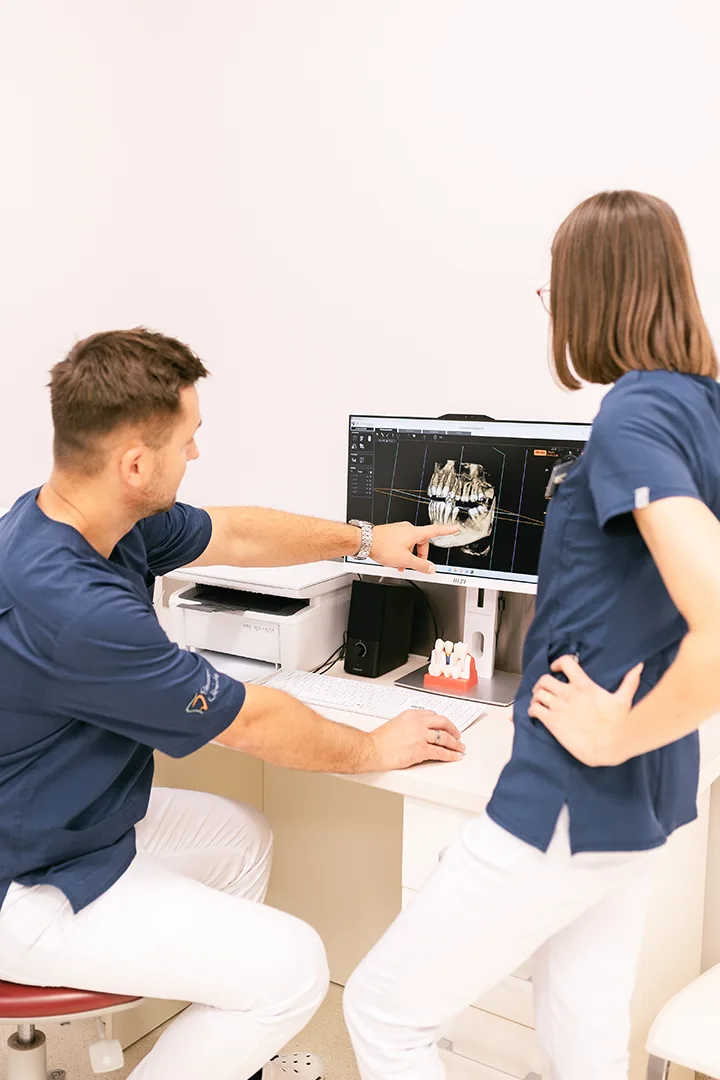
Effective dental treatment is based on proper diagnostics, which are carried out through consultation, clinical examination and modern imaging tests. At Panorama Uśmiechu, we offer a comprehensive range of examinations, including X-rays, 3D tomography and intraoral scans. Thanks to our state-of-the-art equipment and our team’s expertise, we can accurately assess the condition of your teeth, bones and soft tissues and then plan your treatment, whether it’s conservative, surgical, orthodontic or prosthetic.
When is it worth undergoing dental diagnostics?
Diagnostics are recommended if:
- you experience worrying symptoms affecting your teeth or gums,
- you suspect inflammation or infection,
- you are preparing for orthodontic, implantological or prosthetic treatment,
- a tooth is loose or changing position,
- a child reports discomfort in a tooth or there is a problem with their milk teeth,
- the dentist suspects changes that are not visible to the naked eye, such as cysts, resorption or problems with wisdom teeth,
- you want to have a preventive check-up.
Dental diagnostics are the first step before most procedures, from root canal treatment and surgery to aesthetic and paediatric dentistry.
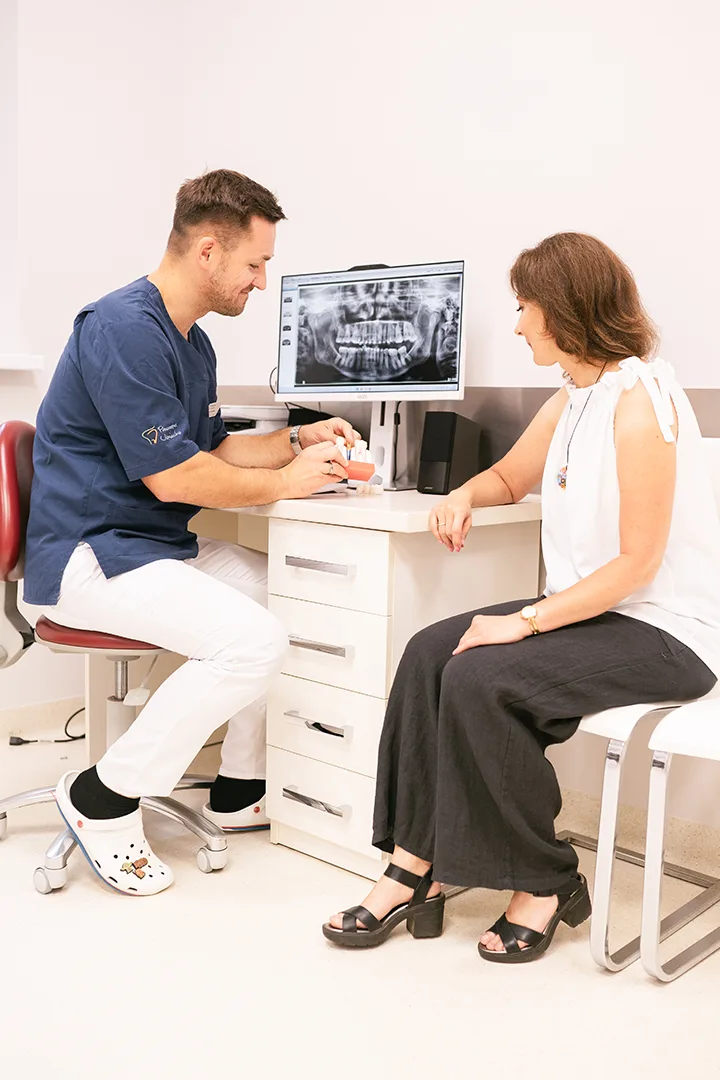
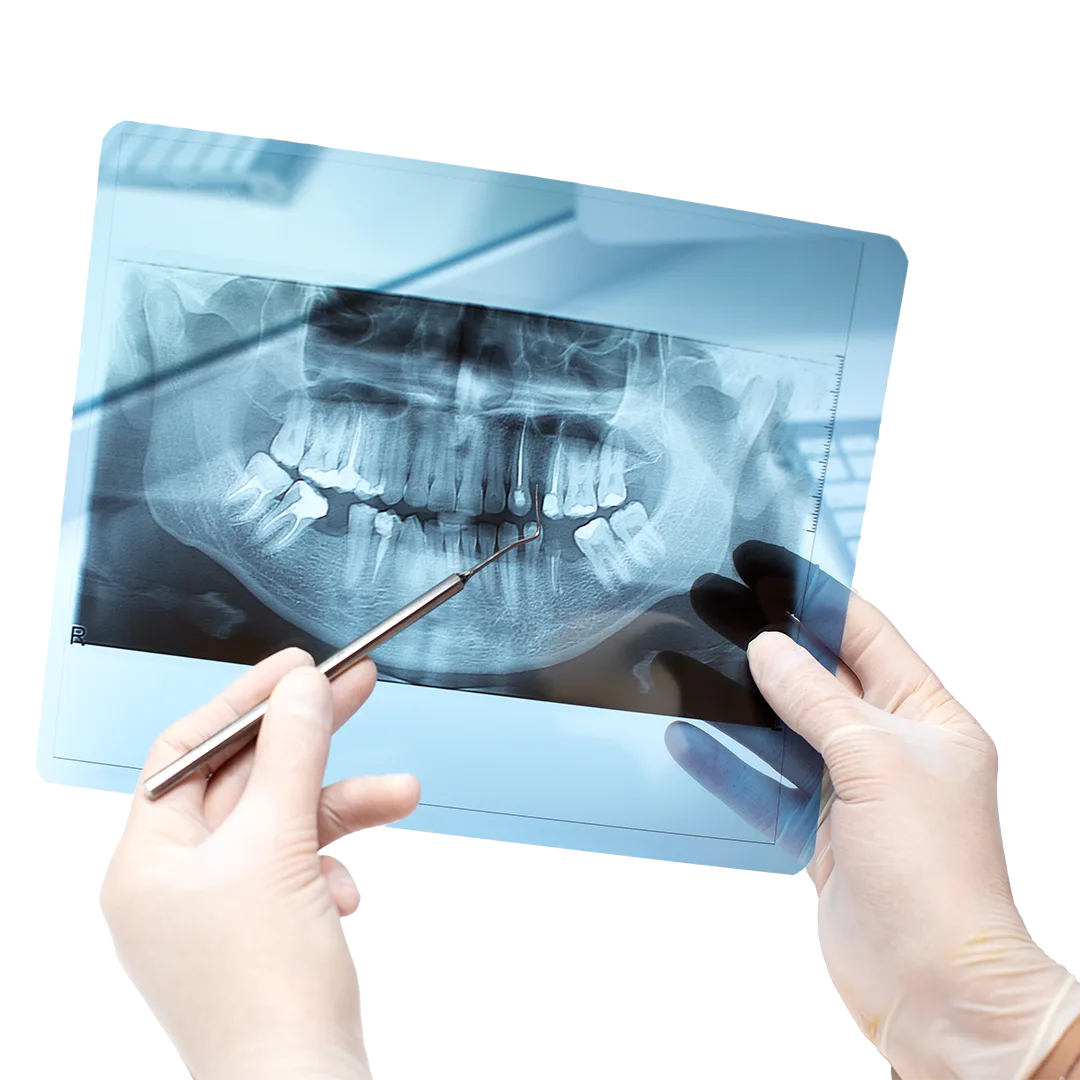
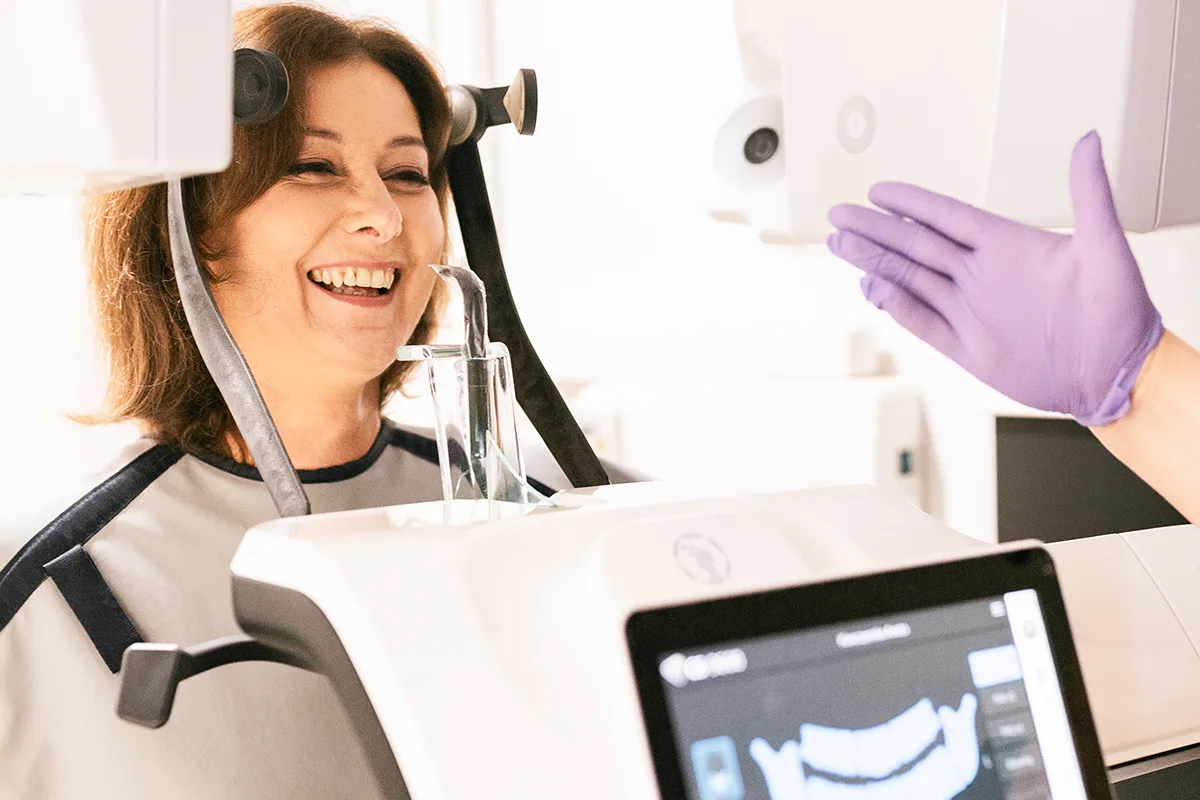
Range of dental diagnostics available at Panorama Uśmiechu
We perform a full range of diagnostic tests at our clinic, including:
- Spot X-rays (RVG) – an image of a single tooth.
- Panoramic X-rays (pantomogram, OPG) – a full image of the oral cavity.
- CBCT 3D computed tomography:
- upper and lower jaws,
- paranasal sinuses,
- temporomandibular joints.
- A cephalometric X-ray – a key examination for orthodontic treatment.
- Anterior-posterior (A-P) X-ray – an additional image used in orthodontics and surgery.
The results of each examination are discussed with the patient and form the basis for planning treatment in the fields of orthodontics, prosthetics, surgery, implantology, and aesthetic and conservative dentistry.
When is 3D computed tomography needed?
We perform CBCT tomography when an accurate assessment of bone conditions is needed prior to implant treatment:
- assessment of the position of wisdom teeth (including impacted teeth),
- precise diagnosis of cysts and periapical lesions,
- analysis of unclear tooth complaints or suspected root fractures,
- detailed preparation for dental surgical procedures,
- orthodontic treatment planning,
- bone assessment prior to augmentation.
CBCT provides three-dimensional images of the maxilla, mandible, and adjacent structures, enabling precise treatment planning. In modern dentistry, it is considered the ‘gold standard’ for diagnostics.
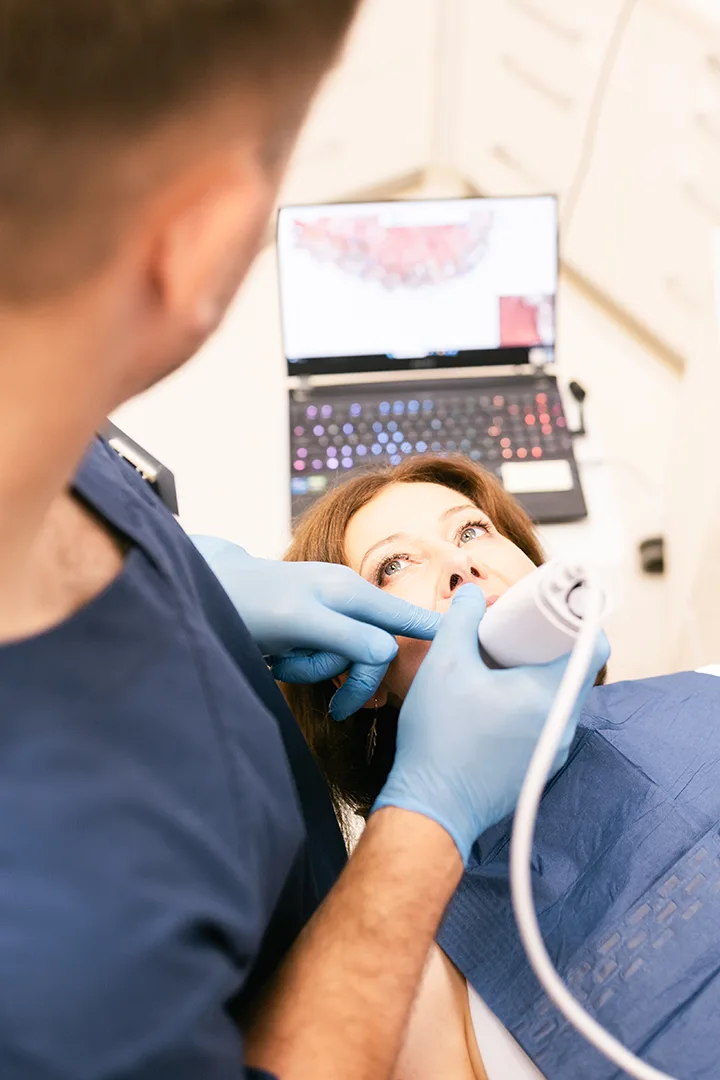
3D dental scanning – a comfortable alternative to traditional impressions
We use an intraoral scanner to create accurate digital models of teeth and soft tissues. 3D scanning allows for:
- stress-free, contactless impression-taking,
- comfortable dental diagnostics for patients with a gag reflex,
- immediate visualisation of teeth in the form of a 3D model,
- precise orthodontic treatment planning,
- fabrication of aligners,
- preparation of crowns, veneers, and other prosthetic work,
- designing mini prostheses for individual teeth,
- fabrication of retainers,
- planning smile aesthetics using digital technologies.
Digital scanning replaces traditional impressions, ensuring greater accuracy and significantly reducing treatment preparation time.
Why are dental diagnostics important?
An accurate diagnosis is essential for effective dental treatment. It enables you to:

Detect problems before symptoms appear

Avoid complications and advanced changes

Plan dental treatment in a predictable manner

Tailor therapeutic methods to the patient’s anatomy

Perform procedures safely and precisely

Minimise the risk of additional costs in the future
Good dental treatment always starts with good diagnostics.
How do we use dental diagnostics for treatment planning?
We start every treatment with a thorough consultation and clinical examination. Diagnostic tests, such as X-rays, CBCT tomography and 3D scans, are additional tools that help us confirm the diagnosis and plan subsequent treatment precisely.
Dental diagnostics play a key role in the following areas:
- orthodontics,
- dental surgery,
- dental surgery,
- prosthetics,
- cosmetic dentistry,
- paediatric dentistry,
- hygiene and prophylaxis,
- periodontology,
- root canal treatment.
Thanks to thorough examinations, we can customise each dental therapy to the patient’s individual anatomy, ensuring a consistent and comprehensive treatment process in one place under the care of one team.
FAQ
Yes. Modern equipment minimises radiation exposure, and the examination itself only takes a few seconds.
No, dental X-rays do not require any special preparation. Before the examination, simply remove your glasses, earrings, and any removable prosthetic restorations. You will receive additional instructions on site.
No, you can have the examination without an additional referral at the request of a Panorama Uśmiechu specialist.
They are not a contraindication. They may be visible in the image, but this does not affect the ability to perform the examination.
When a thorough assessment of the bones, roots, wisdom teeth, cysts or periapical lesions is required, or when planning implant, surgical or orthodontic treatment.
Yes, if there are indications for it. We only take X-rays that are necessary for children, and we always do so in accordance with safety rules.
No, X-rays, CBCT and 3D scans are completely painless.
If the doctor deems it necessary for the diagnosis, we can take it immediately on site.
Would you like a dental examination or a consultation about your symptoms?
Make an appointment at Panorama Uśmiechu, where we will plan your dental treatment based on thorough examinations.